
Running a Sex Offender Check in South Carolina
The South Carolina Sex Offender Registry, often called SCOR, is the official public starting point. SLED operates the statewide database under Title 23, Chapter 3, Article 7. County sheriffs collect registration details, verify local updates, and send them to SLED. The registry is separate from SLED CATCH, the paid criminal-history product. A CATCH result does not include registry status, and a registry profile is not a general rap sheet.
A useful check has two parts. Search the state list first, then confirm questions with the sheriff in the county shown on the profile. The South Carolina county directory routes to all 46 local records sites. The underlying prosecution may also be reviewed through the county Judicial Branch Public Index and clerk. Those sources answer different questions: SCOR shows current public registration data, while the court file documents the charge, disposition, and sentence.
The official SCOR interface shows how South Carolina combines name and location tools. View the SLED registry search source before using its filters.
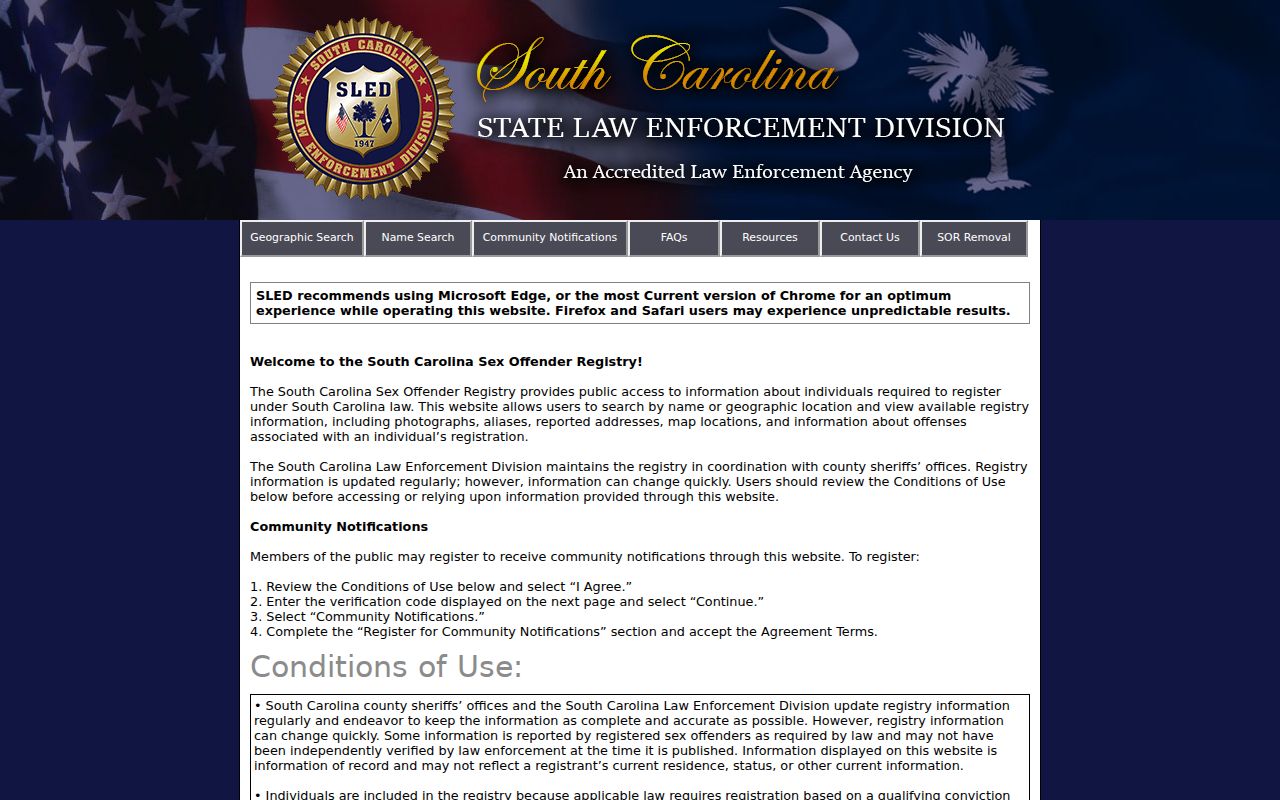
The screen is the correct statewide entry point, but its results still require identity checks and lawful use.
South Carolina Sheriffs Supply Registry Data
Registration is completed with the sheriff in each county required by current law. Residence is central, but work, school, real property, volunteer activity, internship, or vocation connections can create added county duties. One current provision calls for registration with the sheriff in each county tied to property, work, or school within three business days. The operative statute matters because the details have changed.
SCDC, the South Carolina Department of Probation, Parole and Pardon Services, and the Department of Juvenile Justice provide initial information to SLED before release from custody or supervision when the law applies. Sheriffs then handle local verification and updates. Suspected noncompliance should go to the registering sheriff or SLED. Do not confront the person. Call 911 only for an immediate threat.
Note: County sheriffs verify local facts, while SLED maintains the statewide public database and controls its central display.
How to Search the South Carolina Sex Offender Registry
Begin with the smallest reliable set of facts. A name search works best when spelling and known aliases are tested. A place search can use county, city, ZIP code, or an address with the radius control. Results can appear as a list or on a map. A pin is a location aid, not a survey of a parcel, and map accuracy depends on the address supplied to the registry.
- Open SCOR and choose a name or location search.
- Enter known spelling or address details, then broaden the terms if no result appears.
- Open possible profiles and compare the photograph, age, aliases, physical traits, offense, status, and registering county.
- Ask the listed county sheriff to confirm an apparent error or stale address.
| Field Label | Type | Required | Notes |
|---|---|---|---|
| Last Name | Text | Depends on mode | Use spelling and alias variants without assuming partial-match behavior. |
| First Name | Text | No | Narrows a last-name result. |
| County | Dropdown | No | Offers every South Carolina county. |
| City / ZIP Code | Text or dropdown | No | Narrows the location. |
| Address | Text | For radius mode | Used to place the map search. |
| Radius | Dropdown | For radius mode | Current distance choices can change. |
| Map / List | View controls | No | Changes how results are displayed. |
South Carolina research did not confirm a registry email-alert field, so no alert signup is promised. Recheck SCOR when current location data matters.
South Carolina Registry Map Limits
The address and radius tool helps answer a place-based safety question. It should not be read as proof that every nearby registrant appears at a precise map point. Addresses change, location data may need verification, and some juvenile information is not public. Widen the radius if a narrow search produces no result, and try ZIP or county filters when geocoding is uncertain.
SLED publishes a separate map view. The official South Carolina registry map source demonstrates the radius interface without requiring a private person to be named.
The map adds geographic context, but the profile and sheriff remain the better sources for identity and current local status.
Note: A registry map pin is a search aid, not proof of an exact property boundary or current physical location.
Inside a Registry Profile
A profile brings several identity and registration fields together. Compare more than a name. Current and older photographs may appear, along with aliases, age or birth date, sex, race, height, weight, hair, eyes, and identifying marks. The listing can also name the registering county and show public residence, work, school, or property addresses where state law permits them.
| Name & Aliases | Registered name plus alternate names used to cross-reference identity. |
|---|---|
| Photos & Descriptors | Current or added photos, age, physical traits, scars, marks, and tattoos. |
| Addresses | Public residence and other covered locations, with a map aid where posted. |
| Offense Details | Description or statute, jurisdiction, conviction or adjudication date, and tier. |
| Status | Registry identifier, registration or compliance label, and registering county. |
| Other Fields | Public vehicle details may appear; internet identifiers are not all public. |
Victim names are not a profile field. Victim information is categorical or withheld. A listed offense explains why registration applies. It does not predict future conduct. Confirm a possible match with several descriptors and the county before acting on it.
South Carolina Registry Reform Timeline
The registry began under Act 497 in 1994 and expanded in later years. A major shift followed the South Carolina Supreme Court's Powell decision, which found a lifetime scheme without a meaningful review path constitutionally deficient. Act 221 of 2022 created tiers and removal processes. Further changes were signed on May 22, 2025. Old summaries that describe one automatic lifetime rule can now mislead.
SLED maintains current forms and explanations. Review the official South Carolina registry law-change source when tier or removal status matters.
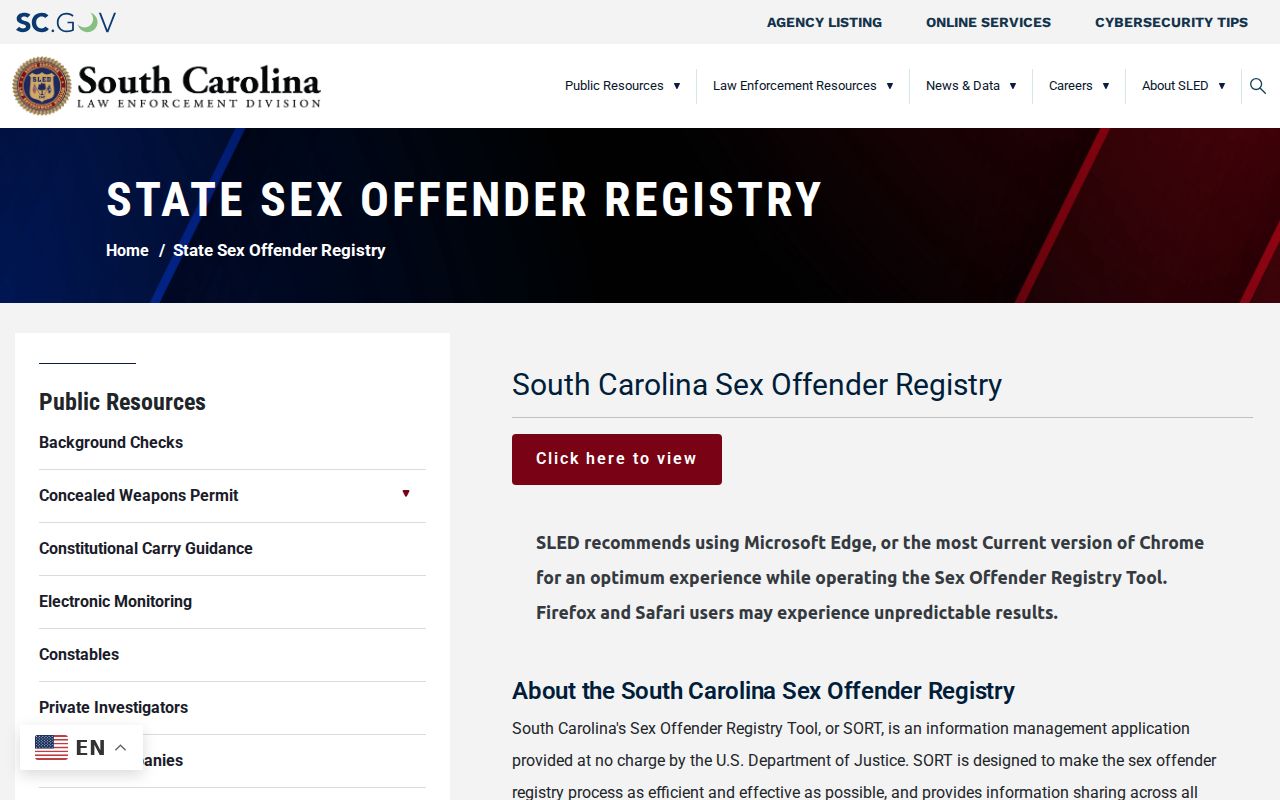
The official resource reflects the post-Powell framework and later amendments more reliably than an older lifetime-registration summary.
South Carolina Registration Requirements and Levels
A tier describes the legal category and controls the earliest possible removal route. It is not a simple risk score. Verification frequency is status-dependent under the current versions of Sections 23-3-450 through 23-3-460. The research does not support assigning one blanket schedule to every person, so current SLED instructions and the statute should control.
| Level / Tier | Earliest Termination Route | Verification Frequency |
|---|---|---|
| Tier I | May request termination after at least 15 years if every condition is met. | Current statute and status govern. |
| Tier II | May request termination after at least 25 years if every condition is met. | Current statute and status govern. |
| Tier III | Lifetime baseline, subject only to relief currently allowed by law. | Current statute and status govern. |
| Juvenile Registrant | A post-2022 removal path exists; public access depends on tier. | Current juvenile rules govern. |
Tier I or II removal is not automatic. The time period, a clean record, substantial compliance, treatment or evaluation duties, a prosecuting-agency objection, and any new sexual offense can affect the result. SLED may run state and FBI fingerprint checks. A filing fee may be set up to $250, and SLED generally has 120 days to act after a complete eligible request is verified.
Note: Reaching the minimum tier period permits a request; it does not guarantee that SLED will approve registry termination.
South Carolina SCOR Versus NSOPW
SCOR is best for South Carolina detail and county routing. The U.S. Department of Justice's National Sex Offender Public Website, or NSOPW, adds cross-state reach. This matters when a person may have moved, works across a state line, or has a registration connection elsewhere. Public-display laws and update timing differ among states, so a national result still needs review through the state registry that supplied it.
The official NSOPW search source is the federal gateway for participating public registries.
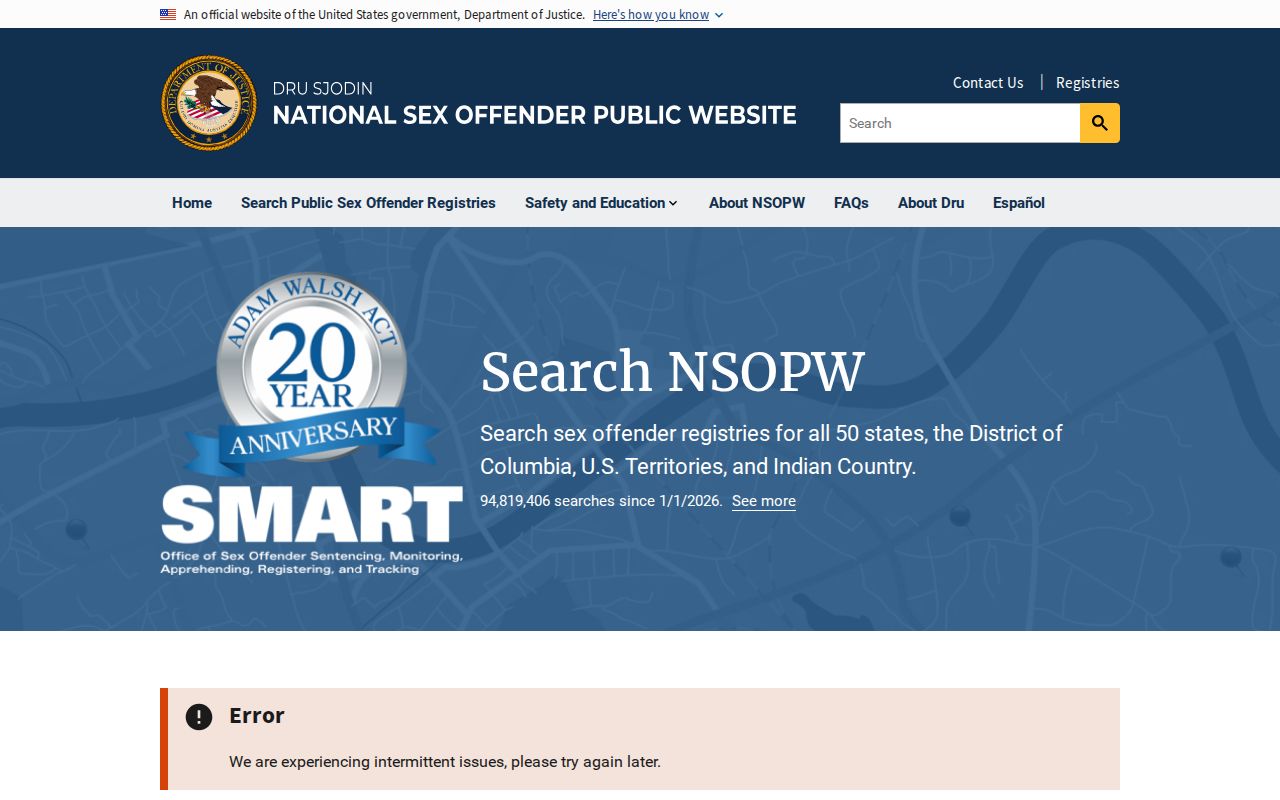
Use NSOPW to widen the search, then return to SCOR or the other state's registry for the fuller public profile.
When South Carolina SCOR Finds Nothing
No result is not proof that no sexual-offense record exists. The search terms may not match. A person may have been removed under current law, have nonpublic juvenile treatment, or be registered in another state. Try known aliases and location filters, use NSOPW, and check the county court record when a specific South Carolina prosecution is known. A spelling change or an address entered in the wrong search mode can also hide a relevant public result.
CATCH may show fingerprint-supported criminal history, but it does not search registry status. The county Judicial Branch index may show the docket, while certified documents come from the clerk. These sources supplement SCOR. They do not change the public status SLED displays.
Note: An empty SCOR search can reflect search terms, removal, nonpublic juvenile treatment, or registration in another state.
Lawful Use of Registry Data
Registry data supports personal, family, and community safety. It is not permission to threaten, harass, confront, or punish anyone. Report a suspected wrong address to the registering sheriff or SLED. Read the South Carolina registry statutes for the current public-access and misuse rules.
The statute source also shows why the warning is more than a portal disclaimer.
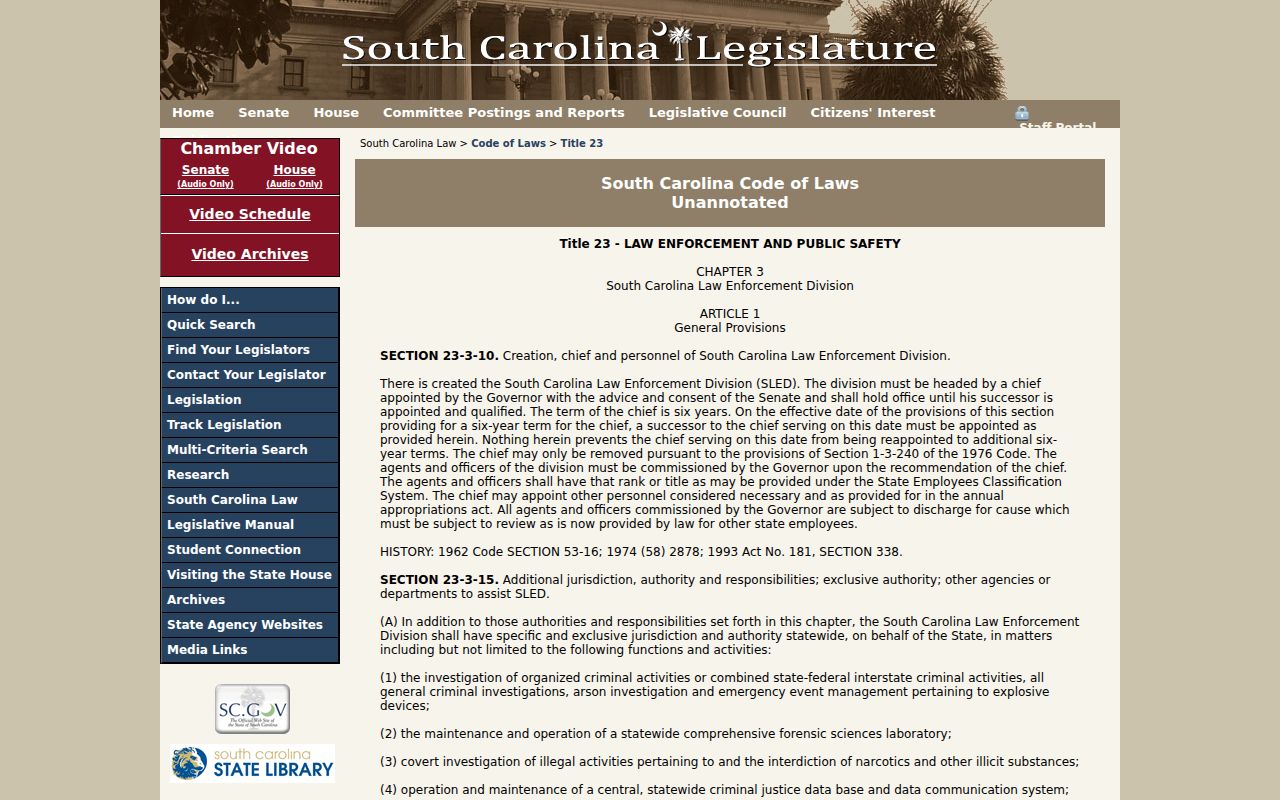
Section 23-3-510 can enhance punishment when a separate crime is committed using information disclosed by the registry.
Misuse is a crime. For a separate misdemeanor committed with registry information, the maximum fine may rise by up to $1,000 and imprisonment by up to six months. A felony term may rise by up to five years.