
Checking Criminal History in South Carolina
Start by deciding what fact needs proof. SLED CATCH returns a paid, South Carolina-only name search of the fingerprint-supported repository. The Judicial Branch Public Index shows events in a selected county court. A detention center is the first stop for a fresh booking, while the South Carolina Department of Corrections covers current state prisoners. The registry uses its own public search. Each channel answers a different question, so the same name should be checked against birth date, aliases, case number, county, and other available identifiers.
The practical order below moves from a broad South Carolina criminal history to the office that created the original record. It also keeps a name match from being mistaken for confirmed identity.
- Run CATCH for the statewide fingerprint-supported history, using accurate legal names and date of birth.
- Choose the likely county in the Judicial Branch Case Records Search and review General Sessions, Magistrate, or listed Municipal Court results.
- Use the county detention center and arresting agency for a new booking, bond, or incident report.
- Check SCDC, the sex offender registry, or federal systems only when that separate record type applies.
- Request the certified disposition or order from the court clerk when official proof or a correction is needed.
For a visual entry point, the official SLED homepage links the agency's criminal-history, crime-data, and registry functions.
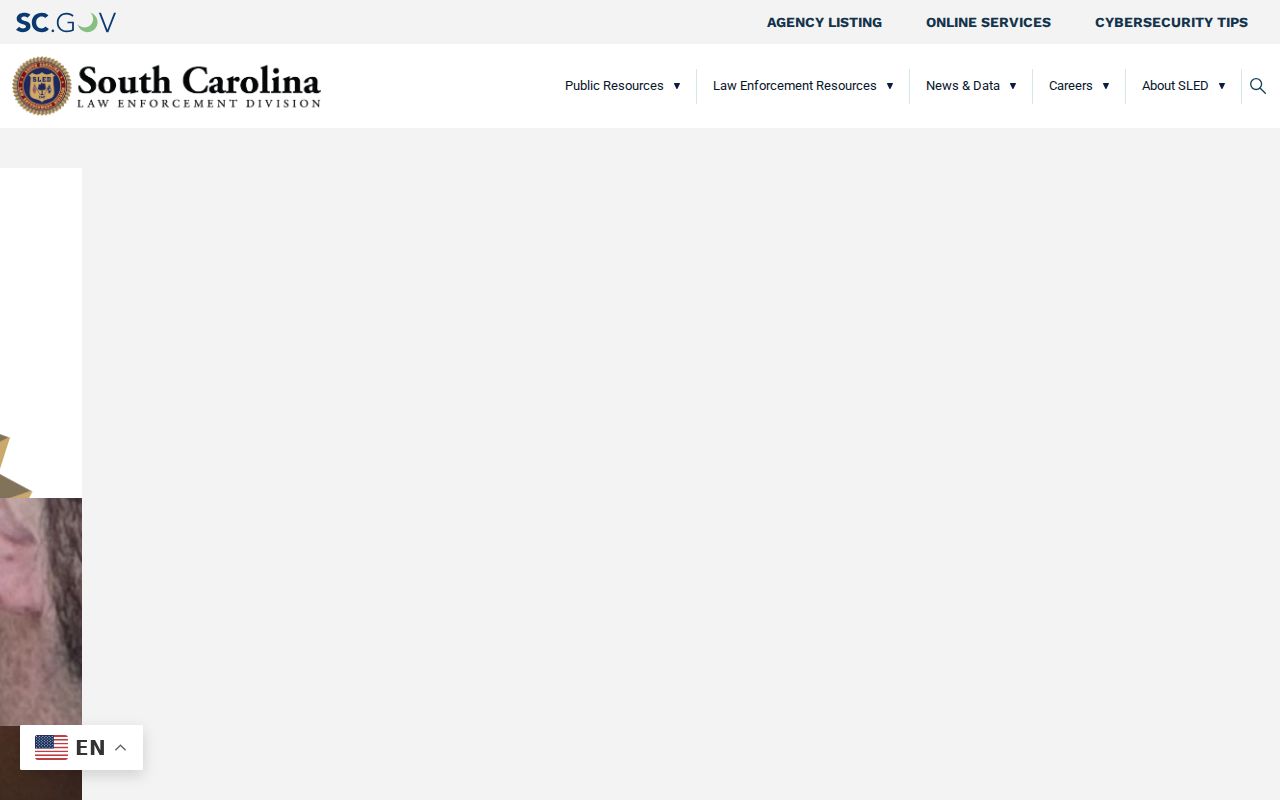
The agency page helps separate CATCH record checks from other SLED services that are not person-level criminal-history searches.
Why South Carolina Records Disagree
A county case and a CATCH report can differ without either screen being fabricated. Fingerprints are the link between a local arrest and SLED's Computerized Criminal History repository. South Carolina law requires covered arrest fingerprints and identifying data to be sent to SLED within three days. Courts then report outcomes. The outcome must attach to the correct fingerprint-supported arrest cycle. Missing prints, aliases, changed charges, rejected transactions, and reporting lag can break that chain.
SLED reported in July 2026 that only 7 percent of direct indictments from 2025 forward had entered the repository, mainly because most subjects had not been fingerprinted. Its fiscal-year 2025 accountability figures also said 42 percent of arrests had dispositions attached, against a 79 percent target. Those findings make the county docket a vital cross-check. A blank CATCH result does not prove that no prosecution exists, and an arrest without a listed result should be compared with the court's certified disposition.
Note: A direct indictment may appear in a county docket before a fingerprint event creates the related statewide repository cycle.
Inside the South Carolina Criminal History Repository
The South Carolina Law Enforcement Division Criminal Justice Information Services division maintains the central identity-linked record. Regulation 73-21 divides that history into identification, identification add-on, arrest, judicial, and custody or supervision segments. AFIS fingerprints help connect aliases and similar names to the right person. CATCH is the public dissemination product built on that larger law-enforcement repository.
A public CATCH report costs $25 plus the posted online service fee. It can show unsealed arrests and reported dispositions supported by South Carolina submissions. It does not search wanted-person files, the sex offender registry, federal history, or records from other states. It is also not the incident narrative or full county docket. The specialized SLED criminal records agency profile explains mail requests, statutory fingerprint channels, report correction, and the Public Dissemination Unit in more depth.
South Carolina CATCH Search Fields
CATCH begins with terms acceptance and a requester-type choice. A guest supplies an email address, receives a confirmation code, and must retrieve the paid result within the portal's stated 72-hour window. The search uses a "starts with" match for first and last name. Name variants may need separate searches, especially when a maiden name or alias appears in older South Carolina records.
| Field | Required | Use |
|---|---|---|
| Last name | Yes | Starts-with identity match |
| First name | Yes | Starts-with identity match |
| Date of birth | Yes | Entered as month, day, and year |
| Sex | Yes | Female or male selection |
| Middle or maiden name | No | Helps distinguish name variants |
| Social Security number | No | Searched when supplied |
A “Special Processing Required” response can mean that multiple subjects match. Preserve the request details and contact SLED's Public Dissemination Unit instead of guessing which record belongs to the person. Fingerprints may be needed in an own-record identity challenge.
Note: CATCH name matching can identify more than one subject, so a similar name alone should never settle identity.
South Carolina Statewide Record Systems
No South Carolina database replaces the rest. The repository compiles identity-linked transactions. Courts show prosecution events. Corrections identifies current state prisoners, while the public registry displays information required under registry law. The table distinguishes those statewide channels from local jail and agency records.
| System | What It Holds | Run By |
|---|---|---|
| SLED CATCH | Fingerprint-supported state arrests and reported outcomes | SLED CJIS |
| Judicial Branch Case Records Search | County trial-court public indexes and listed municipal records | South Carolina Judicial Branch |
| SCDC Inmate Search | People currently sentenced to and incarcerated in state prison | South Carolina Department of Corrections |
| South Carolina Sex Offender Registry | Public registration, offense, and location data | SLED and county sheriffs |
| SCDPPPS records | State probation, parole, and community-supervision information | SCDPPPS |
The South Carolina Judicial Branch homepage leads to court records, forms, and court-level information.
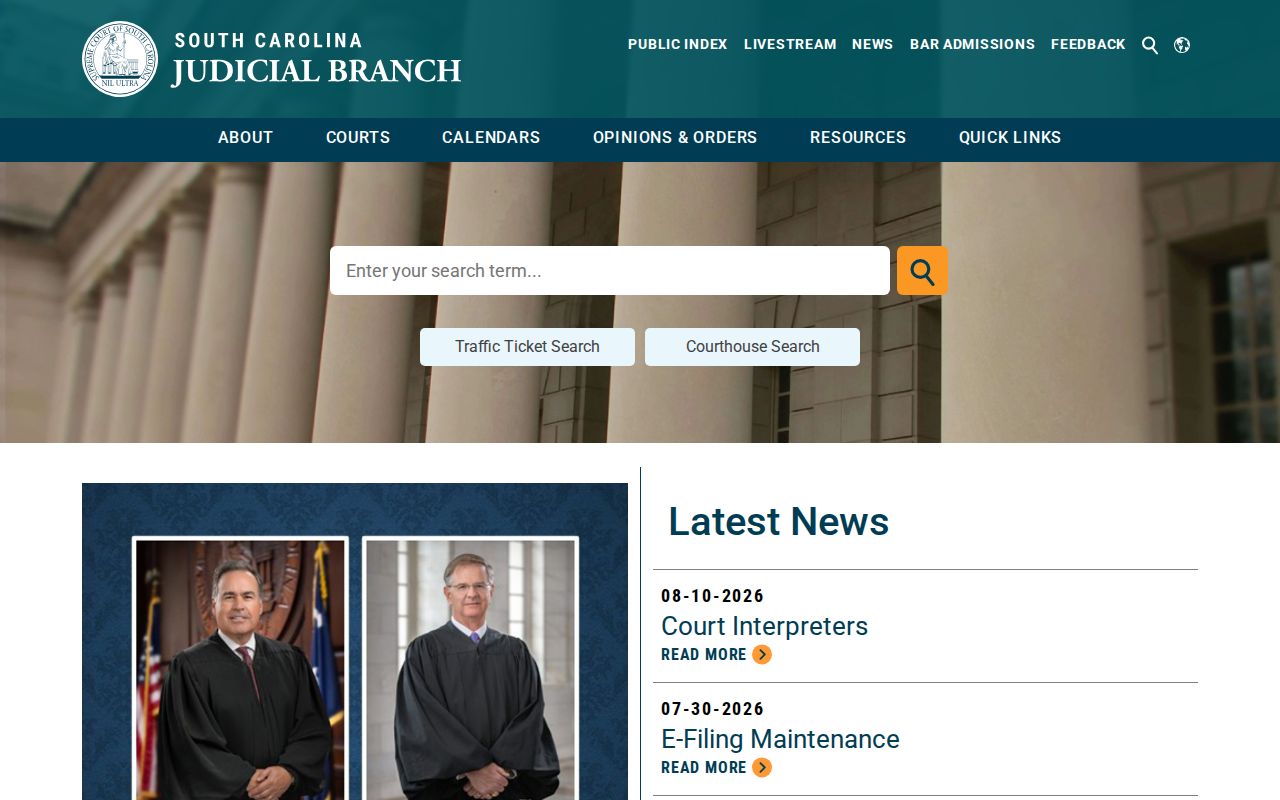
That judicial source should be used with CATCH because a court case file and a compiled rap sheet preserve different parts of the same event.
South Carolina Custody Has Three Layers
Custody searches follow a simple sequence: county jail, SCDC, then the federal Bureau of Prisons. County detention centers hold most new arrestees, people awaiting trial, and some serving local sentences. Their roster formats and update schedules differ. After a qualifying state sentence and commitment, SCDC receives the person and builds a prison profile. Federal custody is separate again.
SCDC's official site is the source for the state prison system and its current inmate search.
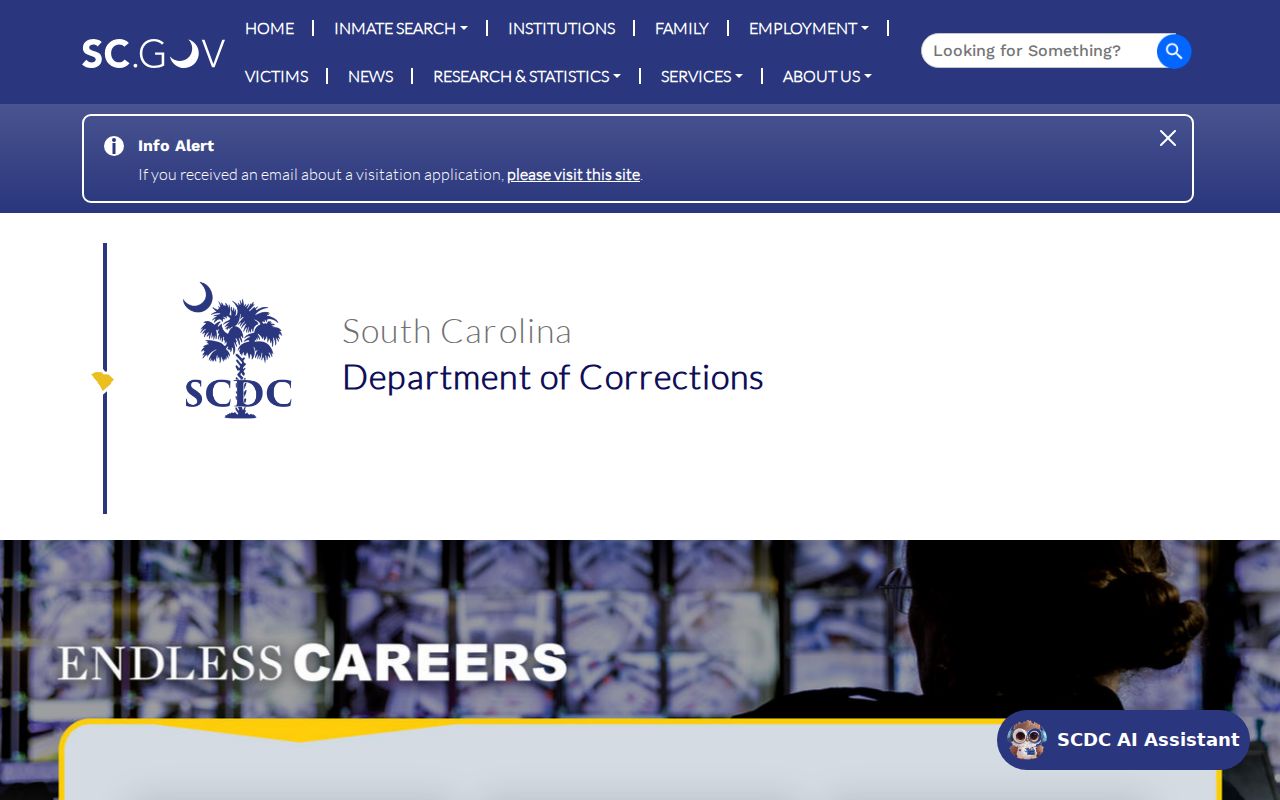
The public SCDC locator reflects people sentenced to and incarcerated by SCDC as of midnight the prior day, not people in county pretrial custody.
South Carolina Prison Institution Records
The SCDC institution directory describes the state facilities that hold sentenced prisoners. It helps identify the institution named in a current inmate result and separates that state placement from county detention.
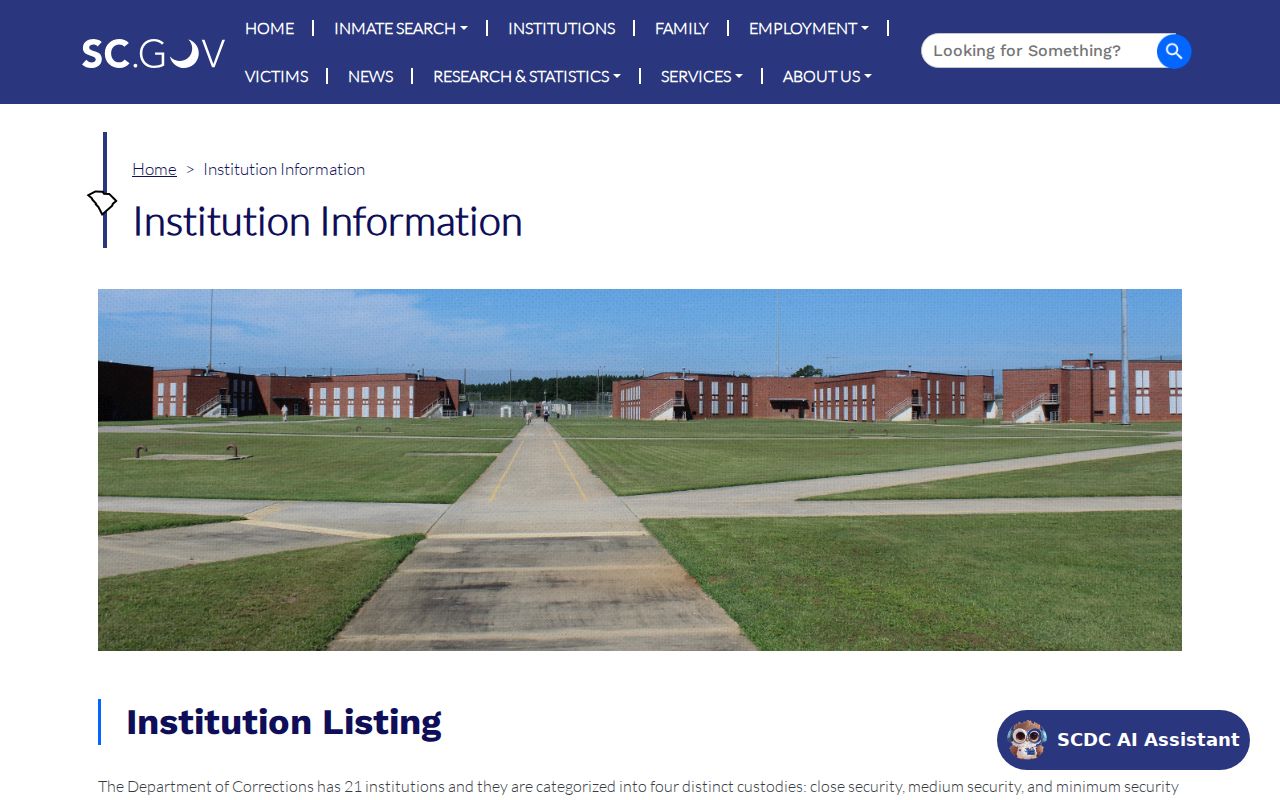
Facility information helps interpret an inmate result, but the sentencing order remains with the county court and is the controlling case document.
Note: A transfer from county detention to SCDC changes the search channel, but it does not replace the county sentence record.
Types of South Carolina Criminal Records
South Carolina records are defined as much by their custodian as by their label. An arresting agency writes the incident or arrest report. A detention center creates the booking record. A court records charges, hearings, outcome, and sentence. SLED compiles eligible fingerprint-supported transactions. The source determines both the detail available and the best correction path.
- Arrest and booking records: document custody, alleged charges, bond, and release, but not guilt.
- Criminal court case files: show the filed charge, docket events, orders, disposition, and sentence in one court.
- Repository rap sheets: compile fingerprint-supported South Carolina arrests with outcomes reported back to SLED.
- Warrants: come from a court and are executed by law enforcement; CATCH does not search them.
- Supervision and registry records: use SCDPPPS and the separate SLED registry channels.
- Disposition
- The recorded outcome of a charge, such as conviction, dismissal, acquittal, or nolle prosequi.
- SID
- The state identifier that SLED links to fingerprints and criminal-history transactions.
- Rap sheet
- An identity-linked timeline of arrests and reported outcomes, not the court's full file.
- Nolle prosequi
- A prosecutor's formal choice not to continue a charge at that time.
South Carolina Warrants Stay Local
No comprehensive public statewide warrant search was found in the official South Carolina sources. CATCH expressly excludes wanted-person information. A realistic check starts with each county where a warrant may have been issued. Search the Public Index, then contact the issuing General Sessions, Magistrate, or Municipal Court and the county sheriff's warrant unit. Some active or sealed matters will not appear online.
A court, not a search website, recalls or resolves a warrant. Anyone who finds a possible warrant on their own record should ask the court how surrender and bond are handled and consider legal advice before appearing where arrest is possible. Calls demanding payment to “clear” a warrant should not be trusted. The South Carolina county directory routes to the sheriff, jail, and court resources for the likely county.
South Carolina Public Access Laws
The South Carolina Freedom of Information Act permits inspection and copying of nonexempt public records from the agency that holds them. It is a fallback for agency material, not a substitute for the designated CATCH product or a clerk's certified case record. Active-investigation material, juvenile records, victim information, sealed cases, and protected identifiers may be withheld or redacted.
Key South Carolina laws:
S.C. Code §30-4-30 creates the general right to inspect or copy nonexempt public records.
S.C. Code §30-4-40 identifies exemptions for protected and sensitive material.
S.C. Code §23-3-115 authorizes individual criminal-history dissemination and the statutory fee, but bars wholesale sale of the database.
S.C. Code §23-3-120 requires covered arrest fingerprints and information to reach SLED within three days.
S.C. Code §17-1-40 governs destruction or sealing for qualifying non-conviction records.
The official South Carolina FOIA text shows both the access rule and its limits.
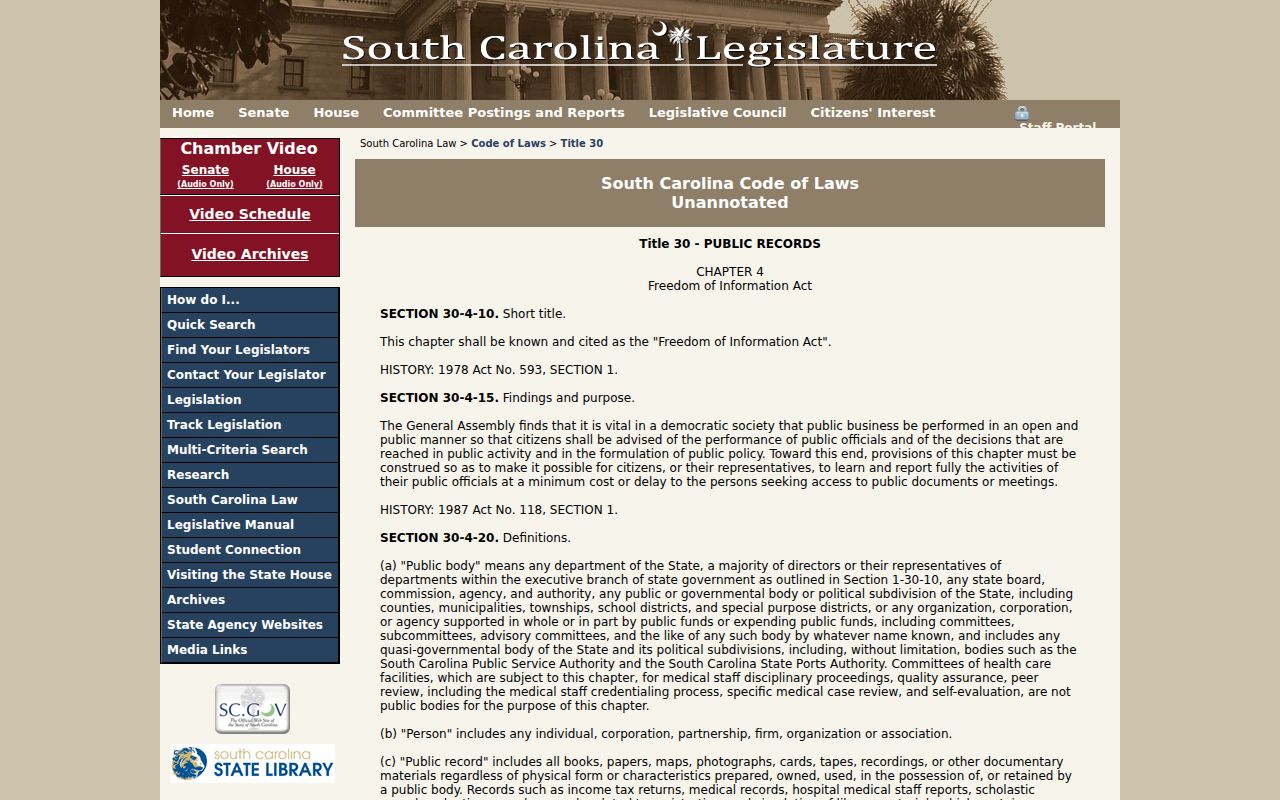
Requests work best when sent to the true custodian with a date, location, report or case number, and a clear description of the needed record.
South Carolina Expungement and Pardons
Expungement begins at the county level. A General Sessions matter starts with the solicitor for the circuit and county where the arrest occurred. A dismissed or not-guilty Magistrate or Municipal case begins with that summary court. Eligibility depends on the charge, outcome, prior record, waiting period, and specific statute. SLED does not decide eligibility. It implements a valid destruction order after the court process is complete.
If an expunged charge remains in CATCH, allow the four weeks SLED states for processing after receipt of the order. Then purchase a new report to verify. If it still appears, send the certified true copy, a CATCH report bought within the last 30 days, and a stamped return envelope to the SLED Expungement Department as instructed. A pardon is different. The Board of Paroles and Pardons may restore specified civil consequences, but a pardon does not erase the court or SLED record.
Note: A dismissal can support relief, but it does not by itself prove that every public record has completed expungement processing.
South Carolina Supervision Records
South Carolina uses a state-run community-supervision system. SCDPPPS supervises probationers, parolees, and other covered populations through county offices. The state does not provide a comprehensive public person-search portal for probation status. A useful verification chain starts with the sentencing court's disposition, then moves to the relevant SCDPPPS county office, SCDC or VINE custody information, Board resources, and a lawful records request.
The SCDPPPS statistics and reports page provides statewide supervision data rather than a general name lookup.
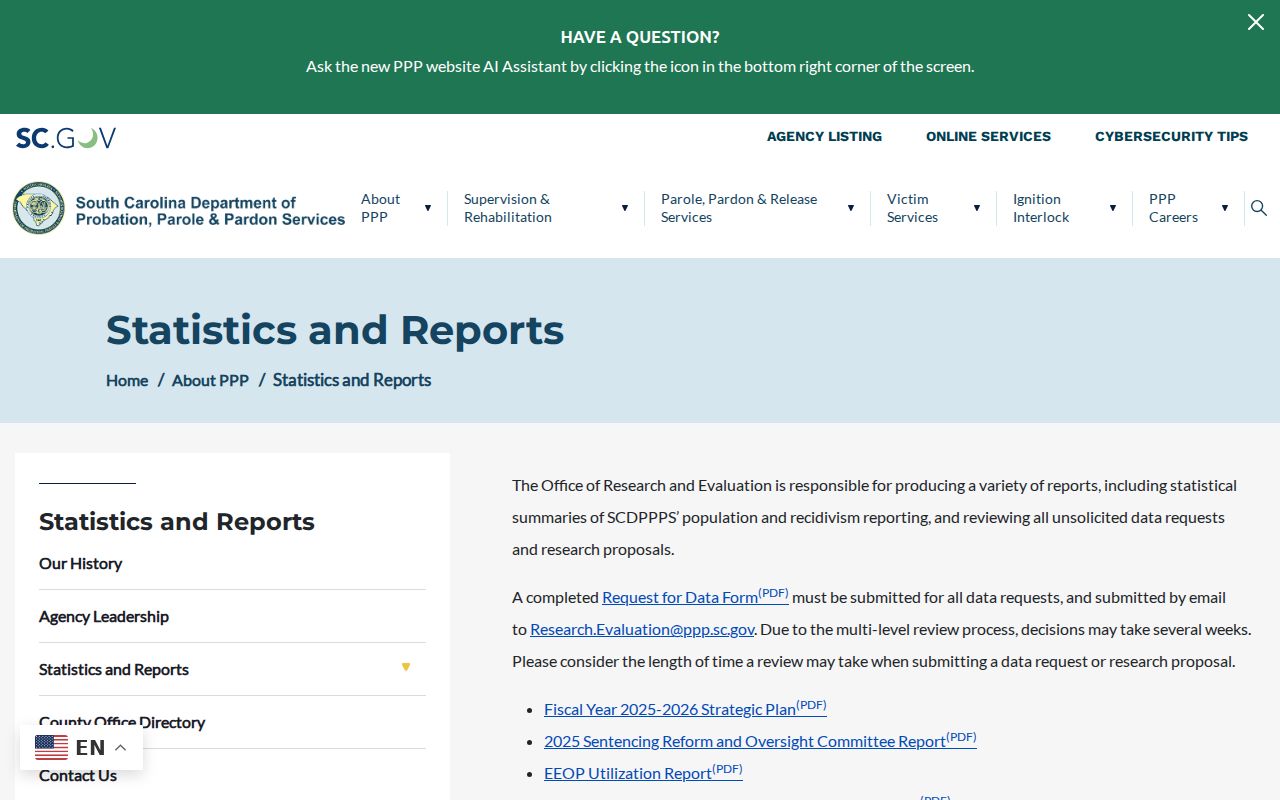
The distinction prevents an aggregate report from being mistaken for proof about one person's current probation or parole status.
South Carolina Criminal Record Fees
State fees vary by product, and local clerks may add copy or certification charges. The current dated CATCH notice controls over older service-fee language still found on parts of the system. Confirm the amount shown at checkout or on the current form before sending payment.
| Official channel | Fee | Scope |
|---|---|---|
| Online CATCH | $25 plus $1.43 service fee effective July 1, 2026 | South Carolina name-based repository check |
| Mail CATCH | $25 | Same state search, with no online charge |
| Reduced CATCH | $8 plus $1.14 service fee effective July 1, 2026 | Approved statutory organizations only |
| FBI Identity History Summary | $18 FBI fee | Subject's national fingerprint history |
| County court copies | Local schedule | Docket documents and certified records |
Mail CATCH requires the official form, a self-addressed stamped envelope, and an accepted business, certified, cashier's check, or money order. Cash and personal checks are not accepted. No guaranteed mail turnaround was located in the official form.
Note: County copy and certification charges are local, so confirm the exact total with the clerk before mailing payment.
Federal Records Beyond South Carolina
South Carolina systems do not include the full federal layer. PACER supplies federal court dockets and filed documents after account registration. The FBI lets a person request their own national Identity History Summary with fingerprints. The Bureau of Prisons locator covers federal custody. Those sources should not be confused with a county case, SCDC imprisonment, or a SLED CATCH report.
The official PACER service is the federal court access point for the District of South Carolina and other federal courts.
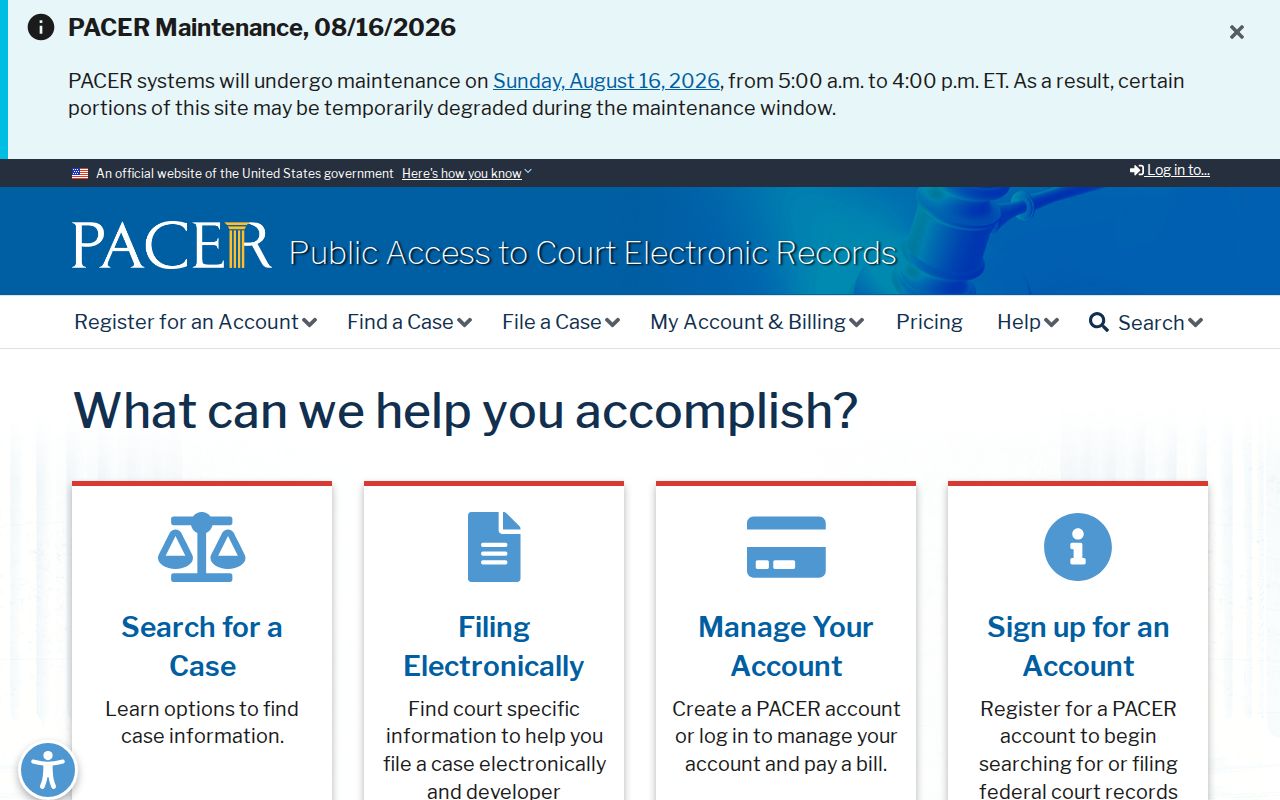
PACER is a docket and document system, not a state rap sheet or a jail locator, so a federal search remains one part of a wider records check.
Criminal Records by County in South Carolina
Arrests, bookings, incident reports, and trial-court files begin with county agencies and courts. South Carolina's largest metro counties have distinct clerks, detention systems, and municipal court coverage. Choosing the county tied to the event is therefore faster than treating the statewide layer as complete. Every one of the state's 46 county record sites routes to those local sources.
Greenville County
Greenville · Largest county, with major court and jail systems
Richland County
Columbia · Capital-area court and detention records
Charleston County
Charleston · Coastal metro with separate municipal courts
Horry County
Conway · Grand Strand county with several local jurisdictions
Spartanburg County
Spartanburg · Upstate booking and General Sessions channels
Lexington County
Lexington · Columbia-metro records kept apart from Richland
York County
York · Charlotte-metro arrests routed through county systems
Berkeley County
Moncks Corner · Growing Charleston-metro county
Browse the full directory of all 46 South Carolina counties to open the criminal records site for any county.